Guide
Tiling a bathroom, stage by stage
Tiling a bathroom's walls and floor takes a tiler three to four days in Checkatrade's 2026 guide and costs £800 to £2,050 across Checkatrade and MyJobQuote. The work runs in a fixed order: prepare, tank, set out, fix, grout, then silicone. Most DIY trouble starts in the first three stages, before a tile goes on.
Updated
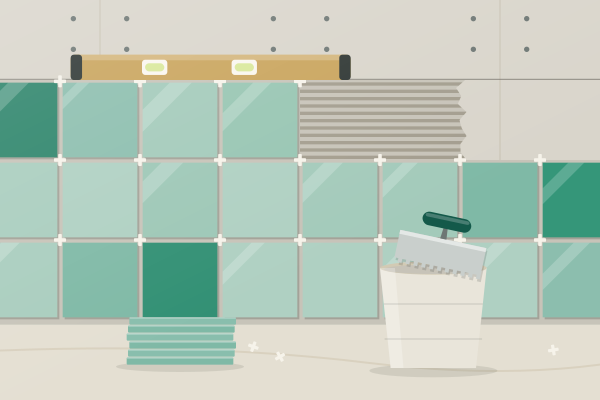
1. Strip and prepare
Take the old tiles off, see what is underneath and make it sound. Plaster that comes away with the tiles is cut back and made good, or the wall is lined with board. A timber floor is made rigid with exterior ply or backer board at least 15 mm thick, screwed at about 300 mm centres, before any membrane goes on. Check the wall can carry the new tile's weight; the guide to tile weight limits explains them. In a house built before 2000 with old vinyl or thermoplastic floor tiles, have them tested for asbestos, following HSE guidance, before lifting anything.
2. Tank the wet areas
Every wall the shower wets, and the floor of a walk-in shower, gets a waterproof layer before tiling. Use one tanking system from end to end, tape every internal corner and pipe, and let it cure for the time the maker gives. It is easy to rush, because nobody sees it once the tiles are up: the tanking guide covers it in detail.
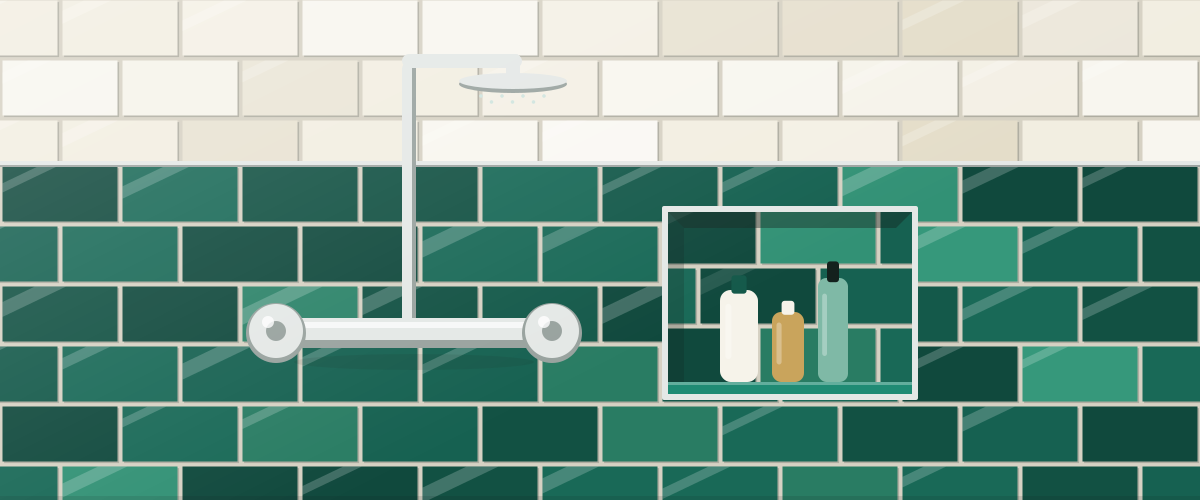
3. Set out
Decide where every cut will fall before any adhesive is mixed. Draw a level line, then shift the layout until the cut pieces land in corners and behind the door, never as a thin strip in plain view. On walls the first full course sits on a straight timber fixed to the wall, and the bottom row is cut in last. On floors, start the layout from the doorway, the part everyone sees.
4. Fix the tiles
Use the adhesive the tile and the background call for: a flexible cement-based adhesive for porcelain, floors and large tiles; ready-mixed tub adhesive only for small, light wall tiles, as its tub states. Spread it with a notched trowel and, on floors and large tiles, aim for full contact with no hollow spots, buttering the back of the tile where needed. Check level and flatness every few tiles, not at the end.
5. Grout and silicone
Grout once the adhesive has set, usually the next day, and clean the face before the haze hardens. Internal corners, the joint along the bath or tray and the floor edge take sanitary silicone, not grout, because they move. Fill the bath with water before running silicone along it so the joint is made with the bath at its lowest. The method is in the grout guide.
Where DIY goes wrong, and when to call a tiler
The usual faults are skipped tanking, adhesive on dabs that leaves tiles hollow, a wall or floor not flat enough for big tiles, thin cuts in full view, and grouting too soon. Large porcelain, a walk-in shower, an uneven old wall or a timber floor are where a tiler earns the fee. For a price, fill in the tiling job card with your areas and what is underneath, and use the tile calculator to work out how many tiles to order. An electric heating mat under the floor is laid before tiling but connected by an electrician.
Common questions
Can I tile a bathroom myself?
A small, dry wall with ceramic tiles is a fair DIY job. Showers, large porcelain and timber floors are less forgiving, because the mistakes are hidden until they leak or crack.
What order do you tile a bathroom in?
Strip and prepare, tank the wet areas, set out, fix the wall tiles, then the floor, then grout and silicone. Most tilers leave the floor until last so it is not scuffed while the walls are done.
Do you tile before or after the bath goes in?
After. The bath or tray is fitted, levelled and tested first so the tiles finish down onto it, with a silicone joint between.
Can you tile a shower wall with large tiles?
Yes, and fewer joints means less to clean, but large tiles need a flat, strong, tanked wall, full adhesive cover and often two people. Check the wall's weight limit first.
How long does it take to tile a bathroom?
A tiler takes three to four days for walls and floor in Checkatrade's 2026 guide. Stripping out, tanking and curing times add to it, and a first-timer should allow longer.