Service
Herringbone, chevron and mosaic tiling
Herringbone and mosaic tiling cost more per m² than a straight lay because each square metre takes longer: Checkatrade's 2026 guide says a tiler lays 8 to 12 m² of floor a day in a plain layout, and patterns cover less. At the £150 to £350 day rate the cost guides give, fewer metres a day means a higher price.
What this covers
Typical price. No cost guide we use gives a separate price for patterns. Checkatrade says a tiler lays 8 to 12 m² of floor a day in a straight lay (2026); herringbone and mosaic cover less, so the same day rate buys fewer square metres.
Typical jobs
- A herringbone porcelain floor through a hallway
- Chevron tiles on a kitchen splashback
- Mosaic sheets lining a shower niche
- A diagonal layout with a straight border in a cloakroom
- Laying out a herringbone centre line on a room that is out of square
What is involved
A pattern is mostly setting out. Herringbone is laid along a centre line, so the tiler first decides where the pattern's spine runs, usually along the length of a hallway or square to the main door, and dry-lays a few rows to check how it meets the walls. Rooms are rarely square, and a herringbone that is straight to one wall can look crooked against another, so the setting out balances the two. Every row ends in angled cuts at the walls, which is where the time goes.
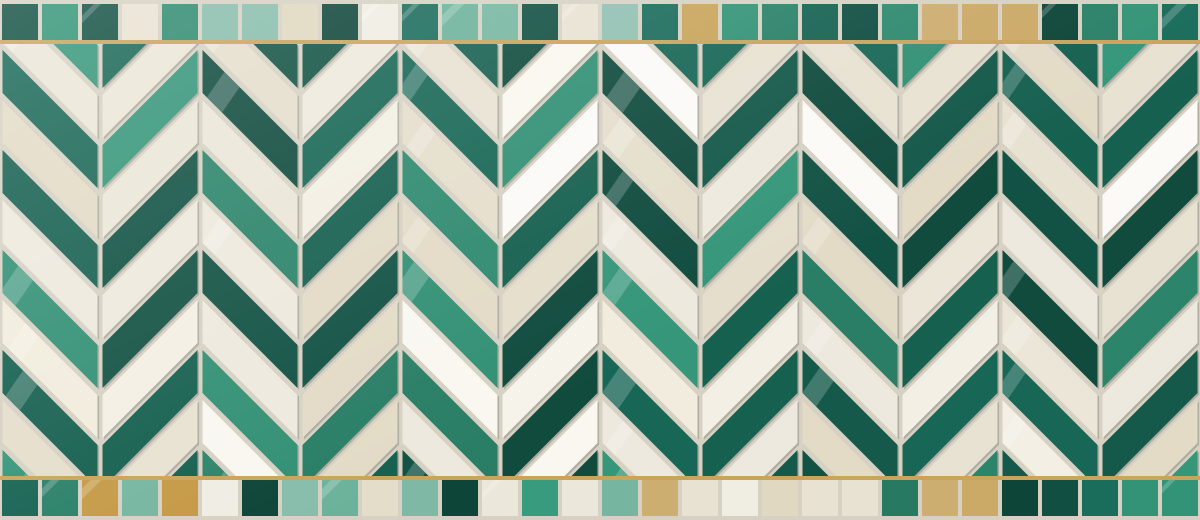
Chevron looks similar but uses tiles cut to an angle at the ends, so the points meet in a straight line; herringbone uses plain rectangles that interlock. Diagonal layouts are a straight grid turned 45 degrees, with a cut at every wall. Mosaic comes on mesh-backed sheets, which are quick to put up but show every wavy line between sheets, and need a fine, even bed of adhesive so the small tiles sit flat. Mosaic has many more grout joints, so grouting and cleaning off take longer too.
Patterns waste more tile. The tile calculator on this site adds 15% for herringbone and diagonal layouts, against 10% for a straight lay, and 12% for mosaic. Order from one batch so the shade matches, and keep a few spare tiles. Ask to see the setting out before adhesive goes down: once a herringbone is under way, moving its centre line means starting again.
Choosing someone for the job
With a pattern, most of the skill goes into setting out, so see it before anything is fixed.
- Where will the centre line run, and can I see the pattern dry-laid or marked out first?
- How will you handle a room that is out of square?
- How much extra tile should I order for this layout?
- For mosaic, how will you keep the joints between sheets from showing?
- What is your per m² price for this pattern, rather than your standard rate?
Read next
Common questions
What is the difference between herringbone and chevron?
Herringbone uses plain rectangular tiles laid in an interlocking zigzag. Chevron uses tiles with angled ends, so the points line up in a straight line down the middle.
How much extra tile do I need for herringbone?
This site's tile calculator allows 15% extra for herringbone or diagonal layouts, against 10% for a straight lay. Your tiler may suggest more for a room with many corners.
Why does herringbone take longer to lay?
Setting out the centre line takes time, and every row ends in an angled cut at the wall. A tiler covers fewer square metres a day than with a straight lay.
How much does herringbone tiling cost?
No cost guide we use prices it separately. A tiler lays 8 to 12 m² of plain floor a day on Checkatrade's 2026 figures, at £150 to £350 a day across Checkatrade and MyJobQuote; herringbone covers fewer square metres a day, so ask for a per m² price.