Service
Victorian and period tile restoration
Restoring a Victorian tiled floor is usually charged by the day after a site visit, at a rate Checkatrade's 2026 guide puts at £200 to £350 and MyJobQuote's floor and bathroom guides at £150 to £200. None of the guides we use prices restoration. The work is cleaning, sealing and patching an original floor, not replacing it.
What this covers
Typical jobs
- Cleaning and sealing a geometric hallway floor
- Replacing missing tiles in a pattern with reclaimed or reproduction tiles
- Re-bedding loose tiles in a Victorian front path
- Lifting a damaged section, repairing the base and re-laying the original tiles
- Repairing a tiled fireplace surround
What is involved
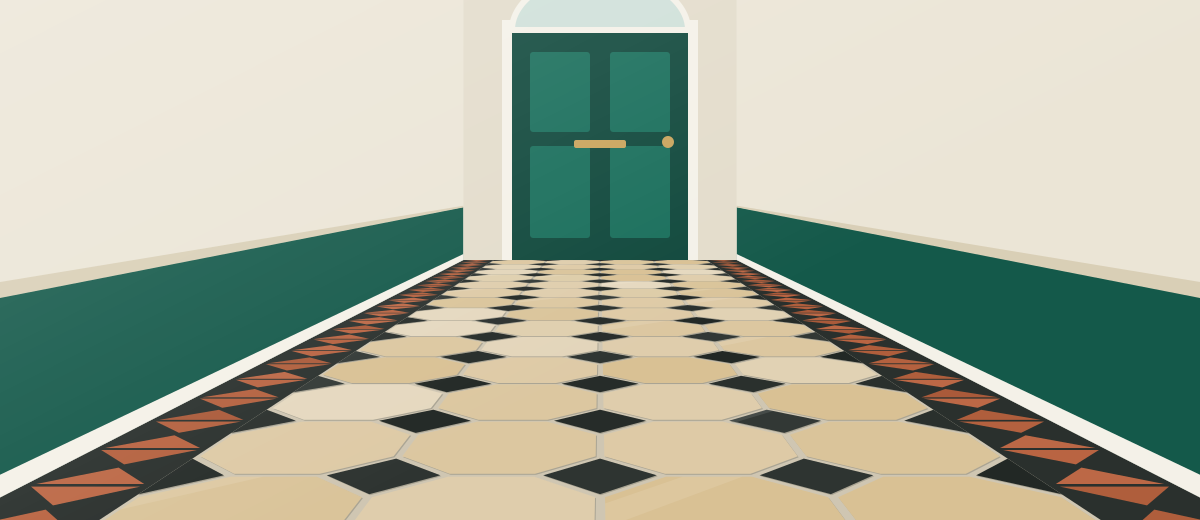
Victorian and Edwardian hallways, paths and porches were laid in geometric tiles, small unglazed clay shapes set in a pattern, and encaustic tiles, where the pattern is inlaid in coloured clay through the tile rather than printed on it. After a century under carpet, paint, cement splashes or old sealers, many are dull rather than damaged. Restoration starts with cleaning: stripping old polish and sealer, lifting stains and grime with cleaners that suit unglazed clay, then sealing with a product that lets the floor breathe.
Breathability matters because most of these floors were laid without a damp proof membrane, often on a lime mortar bed over the ground. Moisture comes up through the tiles and must be allowed to leave; a sealer or a cement repair that traps it can push salts to the surface and loosen tiles. Missing or broken tiles are replaced with reclaimed tiles, sold by the piece by salvage yards, or with reproduction tiles made in the original shapes and colours. Loose tiles are lifted, cleaned and re-bedded, and a damaged section may be lifted, its base repaired, and the original tiles put back.
Not every tiler takes this work on. It is slow and depends on judgement more than speed: how much of a stain to chase, whether to keep a worn tile or replace it. Ask to see photographs of floors the tiler has restored, and ask them to clean a small test area before agreeing a price for the whole floor.
Choosing someone for the job
Restoration depends on judgement more than speed, so look at a restorer's past floors before agreeing a price.
- Can I see floors you have restored, and will you clean a small test area first?
- Where will missing tiles come from: reclaimed or reproduction?
- Which sealer will you use, and does it let the floor breathe?
- How do you repair loose sections, and what do you re-bed tiles in on an old lime base?
Read next
Common questions
Can Victorian floor tiles be restored?
Usually. Most are dirty, painted or sealed with old products rather than broken. Cleaning, patching missing tiles and resealing bring many back without lifting the floor.
Where do replacement Victorian tiles come from?
Salvage yards sell reclaimed tiles by the piece, and several makers produce reproduction geometric and encaustic tiles in the original shapes and colours.
What is an encaustic tile?
A tile whose pattern is made of different coloured clays inlaid into the body, so the pattern goes through the tile rather than sitting on the surface. Many modern tiles sold as encaustic are printed or cement tiles in that style.
Should a Victorian tiled floor be sealed?
Usually with a breathable sealer. Many of these floors have no damp proof membrane, so moisture has to escape through the tiles; a sealer that traps it can cause salt marks and loose tiles.
Tilers who take on victorian tile restoration
2 listed tilers say they do this work.
A selection of them
Order: most recently checked details first.
- York Victorian TilersUnclaimedYork · over 20 years in the trade · York 07799 337444
- No Grout About It - Victorian TilingUnclaimedEdinburgh · over 5 years in the trade · Edinburgh 07743 424913