Service
Outdoor tiling and porcelain patios
A porcelain patio costs about £60 to £120 per m² with materials and labour in MyJobQuote's 2026 patio guide, or £20 to £40 per m² for labour alone; a 20 m² patio is £1,700 to £2,400 and two to three days. Outdoor tiles face frost and rain, so the base, the bedding and the falls matter more than indoors.
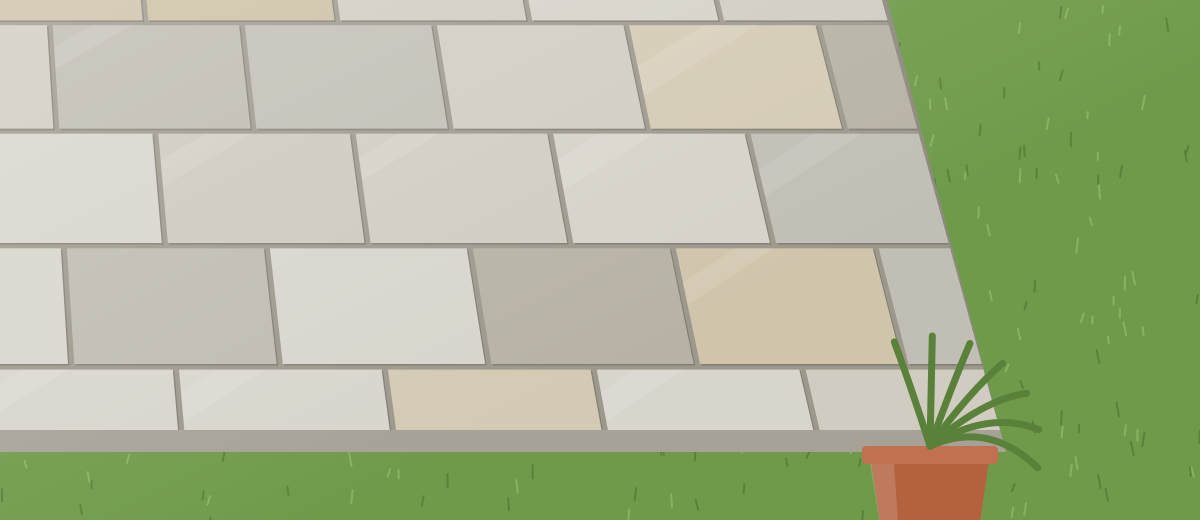
What this covers
What it costs. Prices per square metre and per job, and what moves them, are in the cost guide. Full cost breakdown.
Typical jobs
- A 20 mm porcelain patio on a full mortar bed with slurry primer
- Tiling a balcony over a waterproof membrane
- Porcelain steps and a path matched to the patio
- Matching indoor and outdoor floors through bifold doors
- Re-laying loose outdoor tiles on a sound base
What is involved
Outdoor porcelain is usually 20 mm thick, about twice an indoor tile, so it is stronger. It is laid on a full bed of mortar over a compacted sub-base, and is usually chosen at R11 or a wet pendulum value of 36 or more so it keeps its grip in rain. Because porcelain absorbs almost no water, mortar does not grip it on its own: each slab is brushed on the back with a slurry primer just before it is bedded, or it can lift within a season. Gaps are pointed with an exterior jointing compound or mortar, not indoor grout.
Water has to go somewhere. A patio is laid with a fall away from the house, usually about 1 in 60 to 1 in 80, and its surface should sit at least 150 mm below the damp proof course in the wall, so rain cannot splash above it. In England, paving more than 5 m² of a front garden with a surface that does not let water through, and does not drain to a lawn or border, needs planning permission. Where the patio meets bifold or French doors at the same level, a drainage channel at the threshold takes the water away. Frost also matters: any slab bedded on dabs of mortar with hollows beneath can trap water that freezes and cracks it.
Balconies, roof terraces and external steps are tiled on a different build-up: a waterproof layer first, then tiles in a flexible adhesive suited to outdoor use, with movement joints, because outdoor surfaces heat and cool much more than floors indoors. BS 5385-3, the British Standard for floor tiling, covers external floors as well as internal ones. Some tilers take on patios; others leave them to landscapers and tile only balconies and steps. Ask which kind of outdoor work a tiler does before asking for a quote.
Choosing someone for the job
A patio lasts on what is under it and on where its water goes.
- Do you do the dig and the sub-base, or only lay the slabs?
- Is every slab bedded on a full mortar bed with a slurry primer?
- What fall will you set, and where does the water go?
- How will the patio meet the damp proof course and any doors?
- Which jointing compound do you use, and for a balcony, what waterproofing goes under the tiles?
Read next
Common questions
Can indoor tiles be used outside?
Usually not. Outdoor tiles must be frost resistant and slip resistant when wet, and most outdoor porcelain is 20 mm thick for strength. Check the tile maker says it is suitable for outdoor use.
Why does porcelain paving need a slurry primer?
Porcelain absorbs almost no water, so mortar does not grip it on its own. A slurry primer brushed on the back of each slab gives the bed something to bond to.
What fall should a patio have?
About 1 in 60 to 1 in 80, away from the house, so water runs off rather than pooling. The surface should also sit at least 150 mm below the damp proof course in the wall.