Service
Bathroom tiling
Tiling the walls and floor of a typical UK bathroom costs £800 to £1,200 in Checkatrade's 2026 tiling cost guide, and £900 to £2,050 with ceramic tiles supplied in MyJobQuote's bathroom guide. Checkatrade puts the work at three to four days. The tiled area, the tile, what has to come off first and the tanking around the shower set the price. A bathroom floor of about 5 m² on its own is £300 to £450 with tiles in MyJobQuote's floor guide, and £300 to £650 with porcelain in Checkatrade's porcelain flooring guide.
What this covers
What it costs. Prices per square metre and per job, and what moves them, are in the cost guide. Full cost breakdown.
Typical jobs
- Tiling the walls and floor of a family bathroom once the new suite is in
- A full-height shower enclosure on a tanked backing board
- Tiling around a bath, finished with a silicone joint where tile meets bath
- Taking a half-tiled bathroom up to the ceiling in large porcelain
- Lifting old floor tiles and laying new ones on an overboarded timber floor
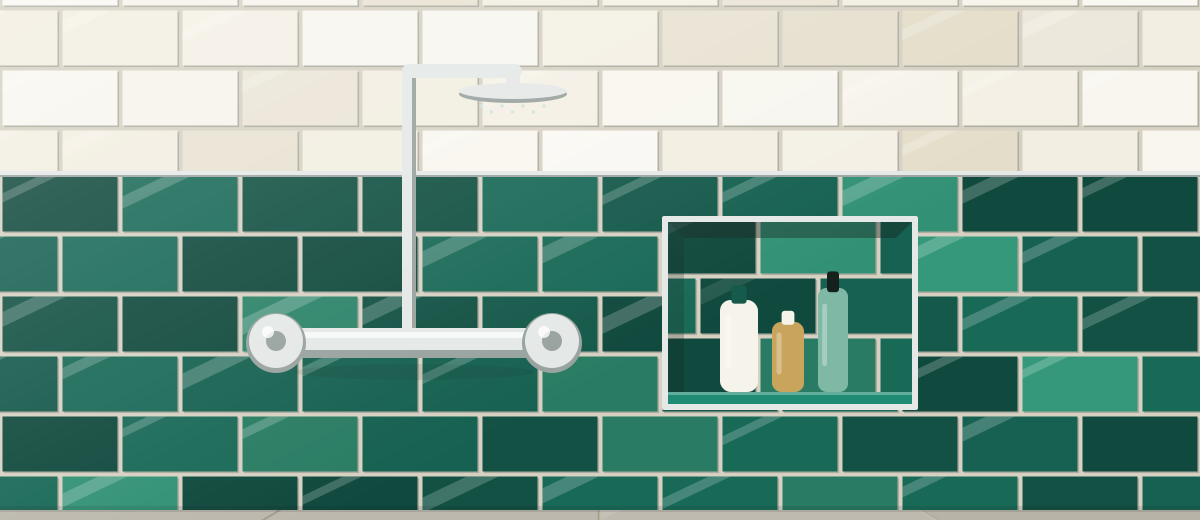
- Tiling a shower wall from the tray upwards on tanked board, with the niche planned into the courses
- A tiled-in bath: the side panel built in board and tiled to match the walls, with an access hatch
- Slip-resistant porcelain bathroom floor tiles cut round the WC and basin pedestal
What is involved
A bathroom asks more of a tiler than any other room in the house, because much of the work that matters ends up hidden. It starts with the backgrounds. Old tiles come off or are tested for a firm bond, walls are checked for flatness against the size of the new tile, and a timber floor is made rigid so it cannot flex and crack the grout: usually overboarded with exterior ply or backer board at least 15 mm thick, screwed at about 300 mm centres, and a decoupling membrane may then be laid over the board. Around the bath and inside the shower the walls are tanked before a single tile goes on. Tiles and grout are not waterproof, and BS 5385-4 is the part of the British Standard that deals with tiling in wet conditions.
Setting out comes next. A good tiler finds a level datum, works out where the cut tiles will fall, and moves the whole layout so the narrow slivers end up in a corner or behind the door rather than beside the window or along the bath. Walls are usually tiled from a batten fixed one row up, and the bottom row goes in last. The floor is often left until the walls are done, so it is not scuffed while the walls are worked on, and internal corners and the joint along the bath are finished with silicone, not grout, because they move.
Bathroom tiling sits in the middle of a refit, so order matters. The bath or shower tray should be in, level and tested before the tiler starts, pipes boxed in, and wall lights and the extractor positioned. A basin pedestal and WC usually go on after the floor. If you are tiling an existing bathroom rather than refitting it, say so: tiling round a suite that stays costs more in cuts than tiling an empty room. Ask too who disposes of the old tiles and whether that is in the price.
Each part of the room asks for something different. Bathroom floor tiles need grip when wet and a stiff base, so a matt or textured porcelain is the usual pick, with small tiles or mosaic where a floor falls to a shower drain. Shower tiles take the hardest wear. Tiling a shower wall begins with the tanking and the tray or former, then the courses go up from a level line above the tray, with even joints that shed water. Large tiles leave fewer joints to clean but want a flatter, stronger wall. Bath tiles finish down onto the rim. Filling the bath before the silicone goes on lets it settle to its loaded position, so the joint does not tear the first time someone climbs in. Use a sanitary silicone, which contains a fungicide, and leave it to cure, often for 24 hours, before the shower or bath is used. A tiled-in bath, with its side panel built in board and tiled to match, needs a removable section so the waste and taps can be reached later.
Choosing someone for the job
Much of a bathroom's tiling ends up out of sight, so these questions are about the parts you will not see once it is finished.
- Which tanking system goes behind the shower and the bath, and will you keep a record of it?
- What happens to the old tiles and the walls behind them, and is disposal in the price?
- Where will the cut tiles fall, and what tile size suits these walls?
- Are trims, silicone and grout included, and who is buying the tiles?
- How many days will the room be out of use?
Read next
Common questions
Do I need to tank a bathroom before tiling?
The shower area, yes. Tiles and grout let water through, and BS 5385-4 treats showers and wet areas as needing a waterproof layer behind the tiles. Walls around a bath with a shower over it are usually tanked too. Walls well away from water are not.
Should the floor or the walls be tiled first?
Most tilers do the walls first and the floor last, so the new floor is not walked on and scuffed while the walls are done. Some lay the floor first so the bottom row of wall tiles sits on it; ask which way your tiler works and why.
Can you tile straight onto bathroom walls?
Only if the wall is sound, flat and able to take the weight. Painted walls need the paint keyed or stripped, old tiles need checking, and anything in the shower should be tanked first. A tiler should look at the walls before quoting.
How long does it take to tile a bathroom?
Checkatrade's 2026 guide puts tiling the walls and floor of a bathroom at three to four days; MyJobQuote's says about four. Taking old tiles off, tanking and waiting for adhesive to cure before grouting all add time.
What tiles are used on a bathroom floor?
Porcelain is the usual choice: dense, hard-wearing and made with slip-resistant finishes. Ceramic floor tiles suit a bathroom with light use. Natural stone works but needs sealing and can be slippery when polished. Ask about slip resistance for anywhere that gets wet.
Can you tile around a bath that is already fitted?
Yes, as long as it is firmly fixed and does not move when you stand in it. The tiles stop just above the rim and the gap is sealed with silicone, not grout. A bath that flexes needs more support first, or the silicone will keep splitting.
What tiles are suitable for shower walls?
Glazed ceramic and porcelain are both fine on a tanked shower wall. Large tiles mean fewer joints to clean; small tiles and mosaic suit curves and sloping floors. The wall's weight limit decides how heavy a tile can go up.
Tilers who take on bathroom tiling
5 listed tilers say they do this work.
A selection of them
Order: most recently checked details first.
- C Walker Tiling & BathroomsUnclaimedManchester · over 5 years in the trade · Manchester 07850 088073
- Greenwood Bespoke Tiling and bathroomUnclaimedYork · over 20 years in the trade · York 07774 544908
- R D Tiling & Bathroom InstallationsUnclaimedBolton · over 10 years in the trade · Bolton 07894 337461
- Waterflow Bathrooms & TilesUnclaimedDundee · Dundee 01382 690670
- Smyles Tiles & MoreUnclaimedNewport · over 5 years in the trade · Newport 07854 090260