Service
Regrouting tiles
Regrouting costs about £15 per m² on average in Checkatrade's 2026 regrouting guide: around £160 for a shower and £380 for a bathroom, materials and labour included. A bathroom is usually a day. It fixes stained, crumbling or cracked grout, but not tiles that have come loose or water already behind them.
What this covers
What it costs. Prices per square metre and per job, and what moves them, are in the cost guide. Full cost breakdown.
Typical jobs
- Raking out and regrouting a mouldy shower enclosure
- Regrouting a kitchen floor where the old grout has crumbled
- Replacing cracked grout lines round a bath, with new silicone
- Switching a shower to an epoxy grout that resists staining
- Regrouting a hallway floor in a darker colour
What is involved
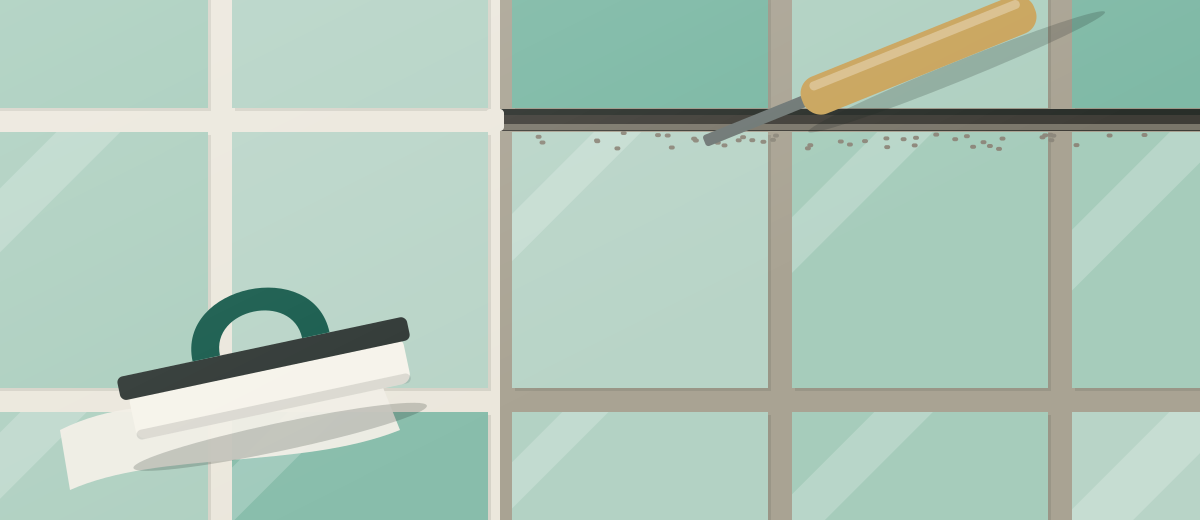
Regrouting replaces the grout between tiles while the tiles stay where they are. The old grout is raked out along every joint with a grout saw or an oscillating tool, deep enough for the new grout to hold, without chipping the tile edges. The joints are vacuumed and wiped, new grout is pressed in with a float, and the face of the tiles is cleaned off before it sets. Silicone in the corners and along the bath or tray is cut out and replaced at the same time, because it ages faster than grout.
It is the right job when the grout is the problem: stained, mouldy, crumbling or cracked in places, with tiles that are still firmly bonded. It is the wrong job when tiles sound hollow when tapped, move when pressed, or when the wall behind a shower is damp. Fresh grout over a failed bond or a leak only hides the problem for a few months. A tiler should tap the tiles and look for staining on the ceiling below a shower before quoting.
The new grout does not have to match the old. Cement-based grout is the usual choice; epoxy grout costs more and is slower to work, but resists staining and does not need sealing, which suits showers and kitchen floors. A darker colour hides wear on a floor. Ask the tiler to show you a sample on a spare tile, because grout dries lighter than it looks when wet.
Choosing someone for the job
Regrouting only helps when the tiles themselves are sound, so a good quote starts with a check.
- How will you rake out the old grout without chipping the tile edges?
- Will you tap for hollow tiles and look for leaks first, and what if you find some?
- Is new silicone in the price?
- Cement-based or epoxy grout, and in which colour?
- Can I see the colour dry on a spare tile before you start?
Read next
Common questions
Can you grout over old grout?
Not properly. A thin layer over old grout does not bond and soon flakes out. The old grout is raked out to a depth the new grout can hold, then the joints are refilled.
How long after tiling can you grout?
With standard adhesive, usually about 24 hours; rapid-setting adhesives can be grouted in a few hours. The adhesive bag gives the time, and grouting too early can disturb the tiles.
Will regrouting stop my shower leaking?
Only if the leak is through the grout and the wall behind is still sound and dry. If the tanking behind the tiles has failed, or tiles are loose, the shower needs stripping and re-tiling.
Should I choose epoxy grout?
It resists stains and water better than cement-based grout and needs no sealing, which suits showers and kitchen floors. It costs more and is harder to apply, so ask your tiler whether they work with it.