Guide
Tiling a fireplace hearth and surround
The hearth is the non-combustible floor in front of the fire and the surround frames the opening. Both need tiles and a cement-based adhesive that cope with heat, never ready-mixed tub adhesive, and Building Regulations, through Approved Document J in England, set hearth sizes for fires and stoves.
Updated
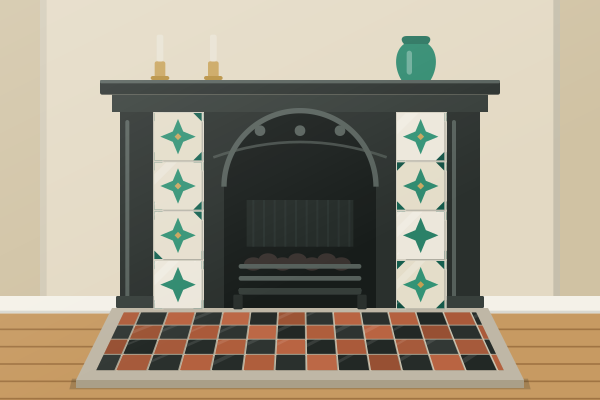
Hearth or surround?
The hearth is the non-combustible floor in front of and under the fire, there to catch embers and keep heat off the floor. A constructional hearth is the solid base built into the floor for a real fire or stove; a superimposed or decorative hearth is the finished slab or tiled panel that sits on top. The surround frames the opening, and in a period cast-iron fireplace the narrow tiled panels either side of the grate are often called slips or cheeks. Hearth tiles take heat and feet; surround tiles are mostly decorative.
Which tiles and adhesive cope with heat
Porcelain, ceramic, quarry tiles, slate and most natural stone handle the heat of a fire well. Some glazes craze under heat, and glass and resin tiles are not designed for it, so check the tile maker's guidance for hearths and surrounds. The adhesive matters as much as the tile: use a cement-based flexible adhesive that its maker states is suitable for fireplaces, not ready-mixed tub adhesive, which can soften when hot. Use a cement-based grout, and a high-temperature sealant rather than bathroom silicone where tiles meet the stove or fire.

Victorian fireplace tiles
A Victorian or Edwardian cast-iron fireplace usually has a tiled insert: two upright panels of decorative tiles held in the frame by clips, with plaster or mortar behind. Reproduction panels are made to fit common openings, and reclaimed tiles turn up at salvage yards. Changing them means freeing the clips or taking out the cast-iron insert, which is careful work; a tiler who takes on Victorian tile restoration or a fireplace specialist is the person to ask. An original tiled hearth in geometric or encaustic tiles can often be cleaned and repaired rather than replaced.
Building Regulations and the fire itself
Hearth size, thickness and the distance from the fire to anything combustible are set by Building Regulations, and they differ for open fires, stoves and gas fires. In England the guidance is Approved Document J; Wales has its own version, and Scotland and Northern Ireland have their own building standards. A tiler can tile a hearth to the size you give them, but that size should come from whoever installs the stove or fire, working to Document J and the appliance maker's instructions. In England a stove is fitted by an installer registered with a competent person scheme such as HETAS, or the work is notified to building control, and a gas fire is a job for a Gas Safe registered engineer. Old fireboards, panels and flue pipes put in before 2000 may contain asbestos, so have anything like that tested before it is disturbed.
Tiling around a fireplace wall
Tiling a chimney breast or the wall around a fireplace is ordinary wall tiling with heat in mind near the opening. Check the surface first: old lime plaster on a chimney breast may need stabilising or lining before heavy stone goes on, and the wall's weight limit applies here as anywhere.
Common questions
What tiles can be used on a fireplace hearth?
Porcelain, ceramic, quarry tiles, slate and most natural stone. Avoid glass and resin tiles, and check the maker's guidance for heat.
What adhesive do you use for fireplace tiles?
A cement-based flexible adhesive that its maker states is suitable for fireplaces or heated surfaces. Ready-mixed tub adhesive is not suitable near heat.
Do fireplace hearths have to meet Building Regulations?
A hearth for a real fire, stove or gas fire does. In England the guidance is Approved Document J. The installer of the fire should give you the hearth size; building control can confirm what applies.
Can you tile over an existing hearth?
Often, if it is sound, flat and non-combustible, but the finished height and the stove's own requirements matter. Ask the stove or fire installer before tiling.
Can a tiler replace Victorian fireplace tiles?
Some tilers who take on restoration do, as do fireplace specialists. The tiles usually sit in a cast-iron frame held by clips, so the frame has to be opened carefully.