Guide
How a shower niche is built and waterproofed
A shower niche is a recess built into a shower wall for bottles, and it is the weakest point of that wall: internal corners on every side and a flat sill that holds water. It needs a sealed box or a tanked recess, a sill that falls towards the shower, and a size set to the tile courses.
Updated
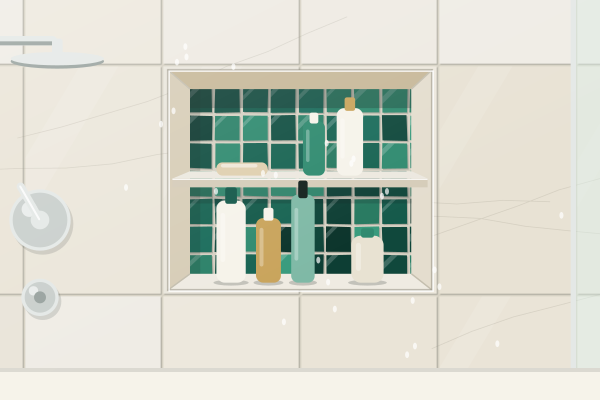
What is a shower niche?
A shower niche is a recessed shelf built into a shower wall, so bottles sit inside the wall instead of on a rack or the tray edge. It is decided before the wall is boarded, because it has to sit between studs or be cut into masonry, and its position should line up with the tile courses. Moving it once the tanking is on means doing that wall again.
Stud wall or solid wall
In a stud wall the niche sits between two uprights, with timber noggins across the top and bottom forming the opening, and its depth is set by the stud size. In a solid wall of brick or block the recess is cut out, which means checking first for pipes and cables and keeping clear of lintels. On an outside wall a recess can cut into the insulation and leave the back of the niche cold, which invites condensation, so many tilers avoid niches on external walls or keep them shallow. A niche must not weaken a wall that carries load; if there is any doubt, ask a structural engineer.
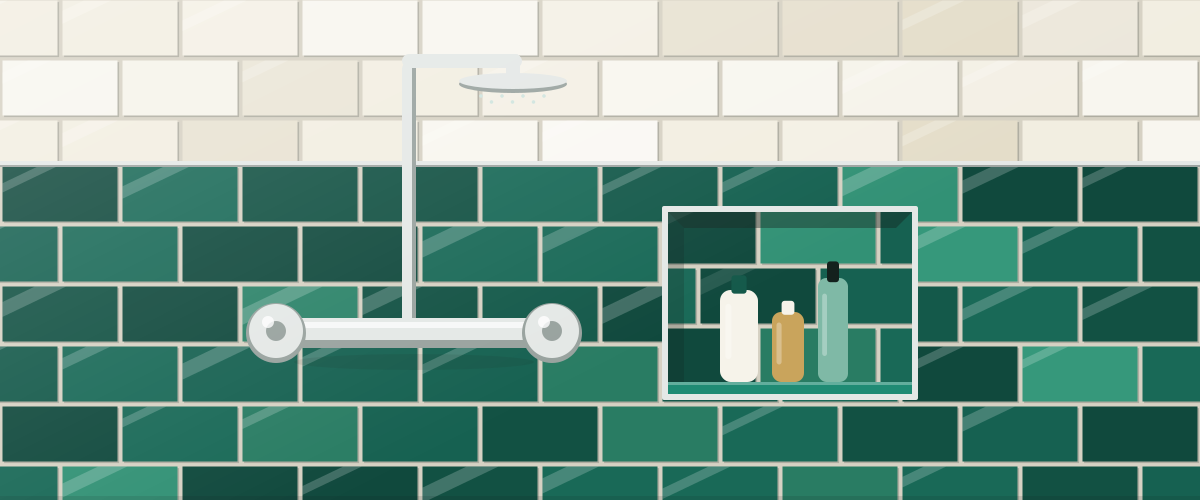
How the niche is waterproofed
The niche is the weakest point of a shower wall: it has internal corners on every side and a flat sill that holds water. There are two common ways to make it watertight. A preformed niche box, usually made of the same foam or cement board as tile backer board, is set into the opening and its joints to the wall are sealed with the tanking system's own tape and sealant. Or the recess is lined with board and tanked like the rest of the shower, with reinforcing tape or preformed corners in every internal angle. Either way, it should be one maker's system throughout, and photographed before it disappears behind tiles.
The sill and its fall
Water left standing on the sill soaks into the grout and turns it black. So the base of the niche is set with a slight fall towards the shower to let it drain, while the top stays level so the joint lines read straight. Some niches use a single piece of stone, quartz or porcelain as the sill, which leaves fewer joints where water can sit.
Tiling the niche and finishing the edges
A tidy niche is planned around the tile. Its height and width are set to whole tiles or clean fractions of them, so the wall's courses run through without slivers. The back is tiled first, then the sides, the top and the sill. The front edges are finished in one of three ways: mitred edges cut at 45 degrees on a wet saw, which look sharp but need a porcelain whose body colour matches its face; a metal or PVC trim, quicker and more forgiving; or a contrast, such as mosaic or a feature tile lining the back. The guide to tile trims compares the profiles.
Common questions
What is a preformed shower niche insert?
A ready-made box, usually of foam or cement board, that fits an opening in the wall and is tiled over. It saves building the recess from scratch, but its joints to the wall still need sealing with the shower's tanking system.
How deep is a shower niche?
Deep enough for bottles. In a stud wall the depth is set by the studs behind the board; in a solid wall, by how far the recess can be cut without meeting pipes, cables or structure.
Can you put a shower niche on an exterior wall?
It can be done, but cutting into an outside wall reduces its insulation and the cold back of the niche can gather condensation. Many tilers suggest an internal wall instead, or a shallow niche.
Do you need a trim on a shower niche?
No. Mitred tile edges are the alternative. A trim is quicker, protects the edge from chips, and comes in metal or PVC finishes that can match the taps.
Can a niche be added to an existing shower?
Only by cutting through the tiles and the waterproofing, which usually means re-tanking and re-tiling at least that wall. It is far simpler to plan one when the shower is built.