Guide
How to clean grout, and what to do about black mould
Clean grout with the mildest thing that works: warm water, a pH-neutral tile cleaner and a stiff nylon brush, then an oxygen bleach paste for stains. Black specks in a shower are usually mould; diluted bleach lifts it from the surface, but mould deep in the grout or under silicone means replacing the joint.
Updated
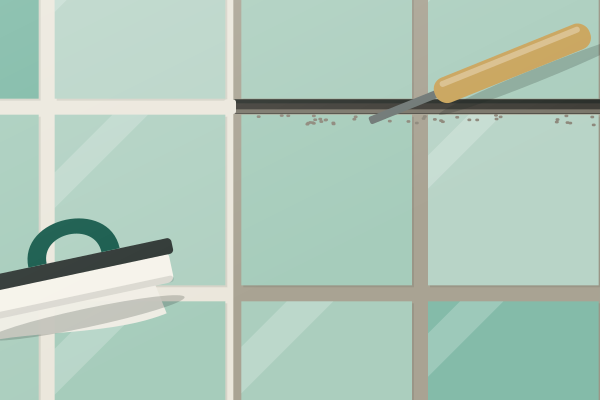
Start with the mildest cleaner
Most dirty grout is surface grime: soap, skin oils and dust packed into the slightly rough face of cement grout. Mix warm water with a pH-neutral tile cleaner, wet the joints, leave it for a few minutes, then scrub along each line with a stiff nylon brush. An old toothbrush reaches corners; a narrow-headed grout brush is quicker on a floor. Rinse with clean water and dry the surface with a cloth, because dirty water left to dry in the joints puts back what you have just lifted.
Keep wire brushes and scouring pads off the grout. They wear its surface open, so it soaks up dirt faster next time, and they scratch glazed tiles and polished stone.
Stained floor grout
Floor grout darkens from foot traffic and from mop water. When a neutral cleaner is not enough, an oxygen bleach (sodium percarbonate) paste or a cleaner sold for grout is the next step: spread it along the joints, leave it for the time on the pack, scrub and rinse well. A steam cleaner with a narrow nozzle also shifts ground-in dirt without chemicals.
The lasting fix is the mop. Dirty water is what turns most floor grout grey, so change it often and rinse the floor with plain water after any strong cleaner. Once the grout is clean and fully dry, a penetrating grout sealer slows the next round of staining. Cement grout takes a sealer; epoxy grout needs none and cleans with a neutral cleaner.
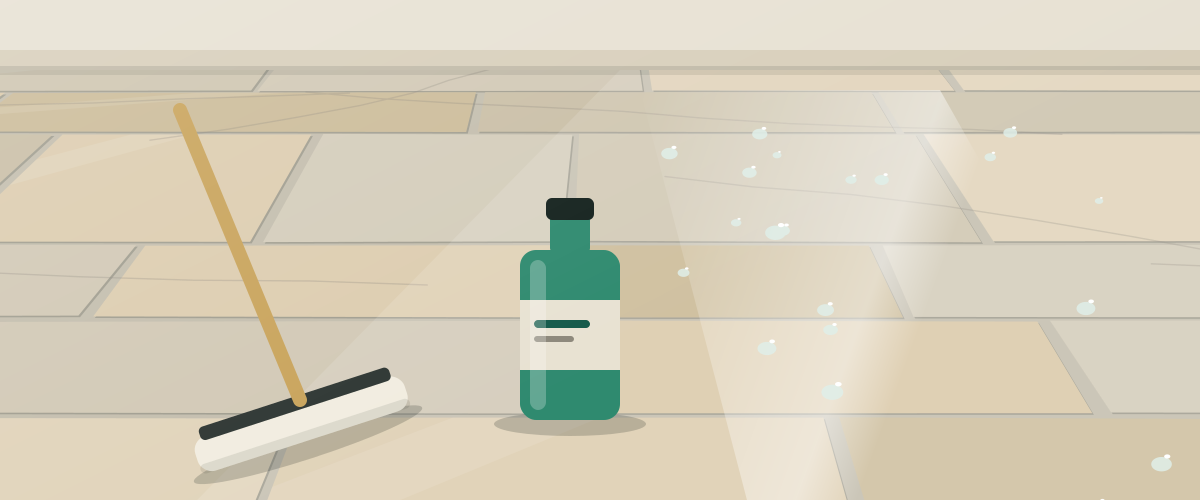
Black marks in a shower: mould or dirt?
Black or dark green specks that come back in the same corners are usually mould, which grows where water sits and the room stays damp. If the marks are on the surface, a mould remover, or household bleach diluted as its label says, brushed onto the joints and left for a few minutes will usually lift them. Rinse thoroughly, and keep the room ventilated while you work and afterwards.
Two cautions. Never mix bleach with other cleaners, acidic or ammonia-based ones above all, because the mixture gives off a harmful gas. And keep bleach and acid cleaners off natural stone such as marble, limestone and travertine, which they etch; use a cleaner made for stone. Bleach can also lighten coloured grout, so try it on a hidden joint first.
Pink or orange slime along the tray or the bottom row is usually a film of bacteria rather than mould. The same cleaning routine shifts it, and it comes back for the same reason: water left standing in the joints.
When cleaning will not shift it
If the black marks still sit below the surface after a proper clean, the mould has grown into the grout and will keep showing through. The fix is to rake out the affected joints and fill them with new grout, which is regrouting. Mould behind a silicone bead along a bath or tray cannot be cleaned out at all: the silicone is cut away, the joint cleaned and dried, and a new bead of sanitary silicone run. The guide to tiling around a bath shows how that joint is made.
Some marks are a warning rather than a cleaning job. Grout that is cracked or crumbling, tiles that sound hollow when tapped, or a patch that stays damp long after a shower all point to water getting behind the tiles. No cleaner touches that; the tiles may need lifting and the wall checking, as grout explained describes.
Keeping grout clean
- Run the extractor fan during a shower and for a while after, or open a window.
- Squeegee or wipe the walls and tray after use so water does not sit in the joints.
- Clean weekly with a neutral cleaner rather than monthly with a strong one.
- Reseal cement grout when water stops beading on its surface.
- On a floor, rinse after mopping and change the water often.
When to call someone in
A large floor, natural stone, or old grout sealed and resealed over the years is where tile cleaning and sealing by a tiler pays off: they use rotary machines and stone-safe chemicals, and can tell surface staining from grout that has failed. Tilers who take on cleaning usually charge by the day. If the grout needs replacing rather than cleaning, the regrouting cost page gives typical prices, and a bathroom tiling job is the route when tiles have to come off.
Common questions
Why is my grout turning black?
Usually dirt or mould. Floor grout greys from mop water and foot traffic. Black specks in a shower that return to the same corners are mould, which needs damp to grow, so better ventilation stops it coming back.
Can you use bleach on grout?
Diluted household bleach lifts surface mould from white cement grout. Rinse it off, ventilate the room, never mix it with other cleaners, and keep it off natural stone and coloured grout.
Does vinegar clean grout?
It is acidic, so over time it can wear cement grout and it etches natural stone. A neutral cleaner or an oxygen bleach paste is the safer choice.
Is it cheaper to clean or regrout?
Cleaning is cheaper while the grout is sound. Once it is cracked, crumbling or stained through by mould, regrouting is the fix that lasts.