Guide
Tiling over underfloor heating: who does which part
Electric underfloor heating costs £60 to £85 per m² in a renovation in Checkatrade's 2026 guide. A tiler lays the mat and tiles over it; connecting it is electrical work under Part P in England, and notifiable near a bath or shower or on a new circuit. Wales, Scotland and Northern Ireland differ.
Updated
Electric or wet?
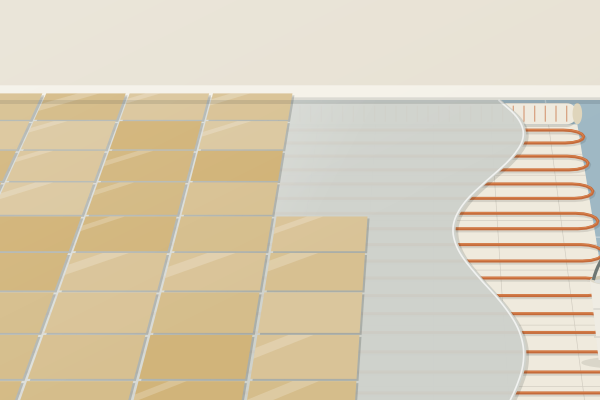
Electric systems are thin heating mats or loose cables laid on the floor just before tiling. They suit single rooms such as bathrooms and kitchens, and add little height. Wet systems run warm water through pipes, usually laid in a new floor, and are part of the home's heating, which is why they are common in extensions and new builds; low-profile overlay systems exist for existing floors. Under tiles, both work well, because tile passes heat to the room quickly.
What does the tiler do?
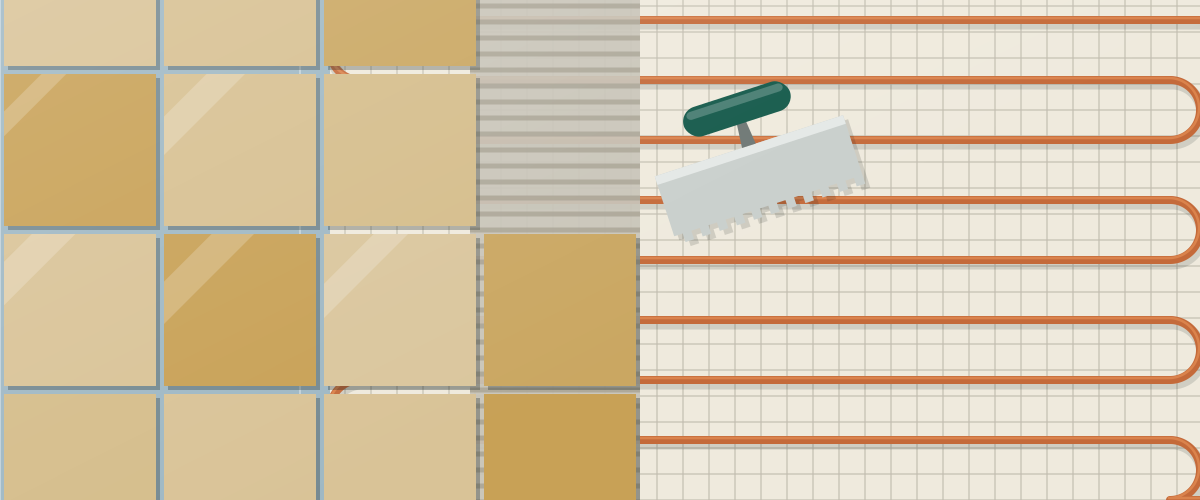
For an electric system, the tiler usually lays insulation boards on a concrete floor, rolls out the mat to a plan that avoids the toilet, bath and fixed units, and embeds it in flexible adhesive or a thin levelling compound before tiling. The mat's resistance is measured with a meter before it is covered, after covering and after tiling, so damage is found while it can still be reached. The tiler leaves the cold tail and floor sensor at the wall for the electrician. For a wet system, the tiler tiles once the floor has dried and been commissioned.
What does Part P mean for you?
In England, electrical work in a home must meet Part P of the Building Regulations. Work is notifiable if it adds a new circuit or replaces the consumer unit, or if it falls in the zone round a bath or shower, within 0.6 m of it and up to 2.25 m high: an electrician registered with a competent person scheme certifies it, or it is notified to building control before it starts. The circuit needs 30 mA RCD protection, which is the electrician's job, and the electrician should see the mat plan before the mat goes down. Keep the certificate; you will need it when you sell. Wales has its own version of Part P with a wider list of notifiable work. Scotland and Northern Ireland have their own building standards. Your local building control can say what applies. To find an electrician, see www.yourelectrician.trade.
What does it cost?
Checkatrade's underfloor heating guide (June 2026) gives £60 to £85 per m² for electric underfloor heating in a renovation and £50 to £75 in a new build. Checkatrade's figure is for supplying and installing the system. The tiling is priced as floor tiling: £15 to £25 per m² labour in MyJobQuote's floor guide, or about £50 as Checkatrade's tiling average. Check whether each quote includes the tiling and the electrician.
After tiling
Do not turn the heating up straight away. Adhesive and grout makers give a waiting time, often a week or more, and a gradual warm-up. Keep the mat's test readings and the maker's guarantee with the electrical certificate.
Common questions
Can a tiler lay electric underfloor heating?
Many do lay the mat and insulation as part of tiling the floor. Connecting it to the mains is electrical work for an electrician.
Does electric underfloor heating need Part P?
In England the work must meet Part P. When it is close to a bath or shower, or needs a new circuit or consumer unit, it is notifiable, so a registered electrician certifies it or building control is told. The rules in Wales, Scotland and Northern Ireland differ.
How much is electric underfloor heating per m²?
Checkatrade's 2026 guide gives £60 to £85 per m² in a renovation and £50 to £75 in a new build, supplied and installed. Check what each quote covers: the tiling and the electrician may be separate.