Guide
Is underfloor heating expensive to run?
The running cost of electric underfloor heating is its power rating times the hours it heats times your unit rate: at Ofgem's cap of 26.32p per kWh (October to December 2026), a 4 m² bathroom mat rated 150 W per m² costs about 16p an hour at full power. A wet system costs what its heat source costs to run.
Updated
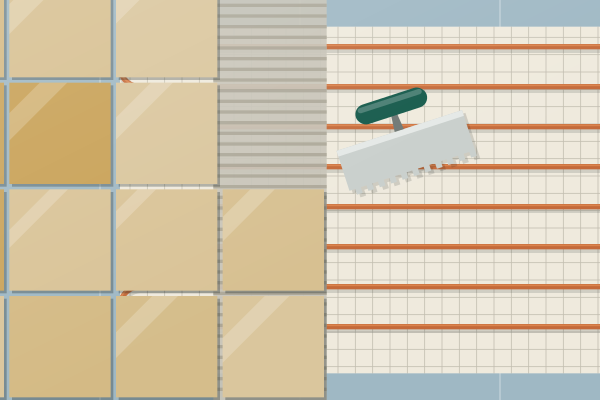
The sum for an electric system
An electric mat or cable turns every unit of electricity it draws into heat in the floor, so working out its running cost is plain arithmetic. Take the heated area in m², multiply it by the rating printed on the mat or its box in watts per m², and divide by 1,000 to get kilowatts. That is the most it can draw in an hour. Multiply that by the hours it actually heats and by your unit rate in pence per kWh, which is on your bill.
As an example, a bathroom with 4 m² of mat rated 150 W per m² draws 0.6 kW at full power. Ofgem's price cap for 1 October to 31 December 2026 sets an average Direct Debit unit rate of 26.32p per kWh, so an hour at full power costs about 16p. Two hours every morning at full power comes to about 32p a day, or about £9.50 over 30 days. Your own tariff may be higher or lower, and a time-of-use tariff with a cheaper overnight rate changes the sum again.
Why the real figure is usually lower
The mat only draws full power while the floor is warming up. Once the floor sensor reaches the temperature you set, the thermostat switches the mat on and off to hold it there, so an hour at temperature uses less than an hour at full power. How much less depends on how warm the room already is, how cold the subfloor is and how well it is insulated, and no single figure holds for every floor.
Insulation is the part a tiler controls. On a concrete floor, insulation boards laid under the mat stop the heat soaking down into the slab, so the tiles warm faster and the thermostat cuts out sooner. A mat laid straight onto cold concrete can run for a long time before the surface feels warm. A programmable thermostat that warms the floor just before the times you use the room does the rest.
Electric or wet: which is cheaper to run?
A wet system runs warm water from the home's heating through pipes in the floor. Its running cost is whatever the heat source costs to make that warm water, whether gas, a heat pump or something else. Under the same October to December 2026 cap, Ofgem's average unit rate is 7.97p per kWh for gas against 26.32p for electricity, so a unit of electricity costs more than three times a unit of gas before allowing for how efficiently the gas is burnt. Wet systems also run at lower water temperatures than radiators, which is why they are often paired with a heat pump, whose cost depends on how efficiently it turns electricity into heat.
That is why the usual pattern is electric mats for single rooms used in short spells, such as a bathroom or an en suite, and wet systems for whole floors heated for hours, such as an extension or a new build. A wet system costs more to put in and needs a deeper floor build-up; an electric mat is cheaper to buy and lay but dearer for each hour it runs.
Does the floor finish matter?
Yes. Tile and stone are dense and thin, so heat passes through them to the room quickly, which is why tiles are the usual finish over heated floors. Porcelain and natural stone both work well. The adhesive and grout should be flexible types made for heated floors, because the floor expands and contracts each time it warms and cools. Thick rugs, bath mats and fitted furniture hold heat in the floor beneath them, so the mat is planned around where cabinets, the bath and the WC will stand, and nowhere it will be covered. The guide to porcelain and ceramic tiles covers choosing the tile itself.
What it costs to put in
Running costs are only half of the sum. Checkatrade's underfloor heating guide (June 2026) puts an electric system at £60 to £85 per m² in a renovation, supplied and fitted, and the tiling on top is priced as floor tiling: £15 to £50 per m² for labour across the MyJobQuote and Checkatrade guides. The underfloor heating cost page sets the figures out. The tiler lays the insulation and the mat, and connecting it to the mains is work for an electrician under Part P in England, as the guide to tiling over underfloor heating explains.
Questions to ask before you choose
- What is the mat's rating in watts per m², and how much of the floor will it cover?
- Will insulation boards go under it, and how thick are they?
- Which thermostat and floor sensor come with it, and can it be set to a timetable?
- Who is the electrician, and will the work be certified or notified?
- How long must the adhesive and grout cure before the heating is first switched on? The guide to tile drying times covers the waits.
Common questions
How much does electric underfloor heating cost to run per hour?
Multiply the heated area by the mat's rating in watts per m², divide by 1,000 and multiply by your unit rate. A 4 m² mat at 150 W per m² costs about 16p an hour at full power at 26.32p per kWh, and less once the floor is up to temperature.
Is underfloor heating cheaper to run than radiators?
A wet system on the same heat source can be, because it works at lower water temperatures, but it depends on the heat source and the house. Electric underfloor heating costs more per unit of heat than heating from gas, so it suits small rooms used for short periods.
Should electric underfloor heating be left on all day?
Not usually in a bathroom. A timer that warms the floor before you use the room costs less than holding it warm all day, especially on a floor with insulation under the mat.
Does underfloor heating work under porcelain tiles?
Yes. Porcelain is dense and passes heat well. Use flexible adhesive and grout made for heated floors, and follow the adhesive maker's warm-up schedule before running it normally.