Guide
When new tiles can go over old ones
You can tile over old tiles when they are firmly bonded, flat and clean, the combined weight is within the wall's limit and the extra height works at doors and fittings. Loose, cracked or hollow tiles must come off, and so should tiles in a shower that may have leaked.
Updated
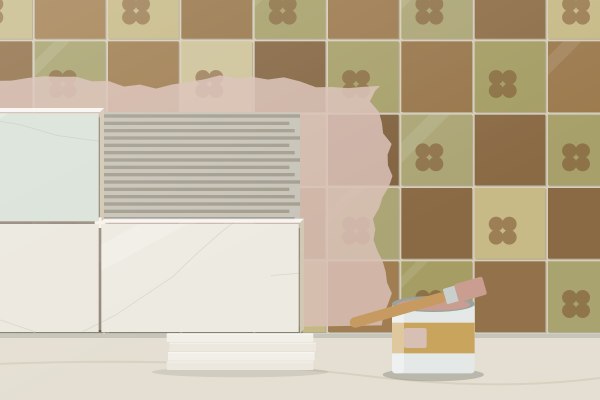
When can new tiles go over old ones?
When the old tiles are firmly stuck, the surface is flat, and the extra weight and thickness are acceptable. A tiler taps every area for hollow sounds, checks for cracks and movement, and degreases the surface. The glaze is then primed with a product made for non-porous surfaces, or abraded, so the new adhesive has something to grip. Done properly, it saves the mess and time of stripping a room.
When must the old tiles come off?
When any are loose, hollow or cracked across several tiles, because the new tiles will only be as sound as the old ones beneath. When the combined weight would pass the wall's limit: about 20 kg per m² for tile and adhesive on a gypsum plaster finish under BS 5385-1, and the old tiles count. And in a shower, when there is any sign of a leak, because tiling over hides a failed waterproof layer rather than fixing it.
What about floors?
On a floor the questions are height and stiffness. A second layer of tile and adhesive raises the floor, so doors may need trimming and thresholds may step. The old floor must be sound and flat; tiling over cracked floor tiles usually passes the crack through. Do not tile over vinyl, cushioned flooring or carpet tiles. If the old floor is vinyl or thermoplastic tiles in a house built before 2000, have it tested before anyone disturbs it.
Is it cheaper?
Usually, because there is no stripping and less making good. Checkatrade's 2026 guide gives about £13 per m² to lift a ceramic floor and £6 per m² to prepare it after, so on a floor that can stay, that is the saving. On walls, stripping tiles often damages the plaster, so the saving can be larger.
Common questions
Can you tile over tiles in a bathroom?
On walls that are sound and away from water, often yes. In a shower it is safer to strip back, check the waterproofing and tank before re-tiling.
Do you need a primer to tile over tiles?
Yes. A primer made for glazed or non-porous surfaces, or abrading the glaze, gives the new adhesive a key. The adhesive maker says which.
Can you tile over floor tiles?
If they are sound and flat and the extra height works at doors and thresholds. Loose or cracked floor tiles should come up first.